Add files
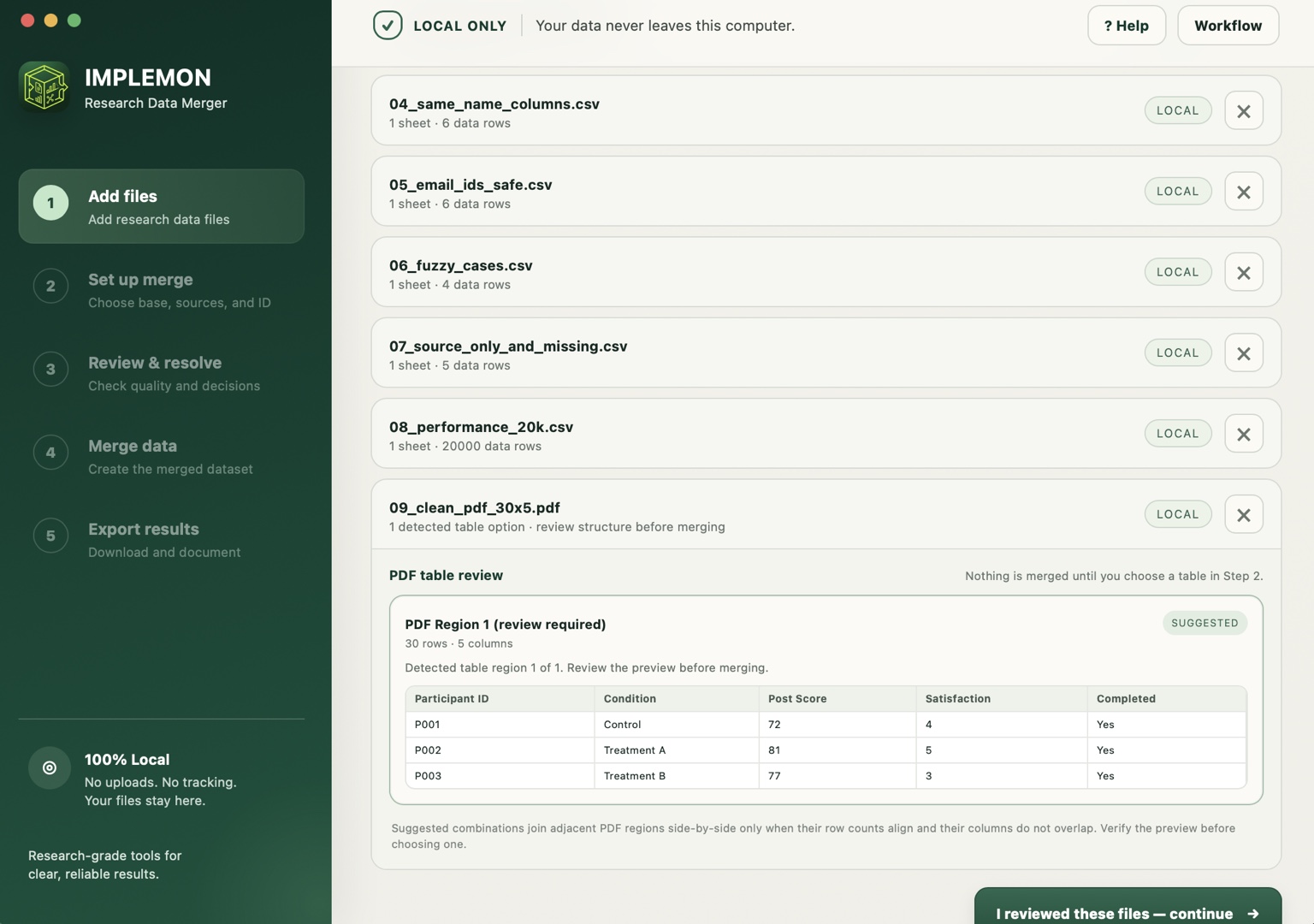
Load the tables that belong to the same study.
Research data rarely arrives in one clean table. Bring participant rosters, survey exports, study files, and other datasets together by ID — while keeping questionable matches visible for you to review.

A participant ID has an extra zero. One export has spaces. Another file contains a duplicate. Two columns share a name but not the same values. A normal merge can quietly turn those details into bad data. Research Data Merger makes them review steps instead.
Load the tables that belong to the same study.
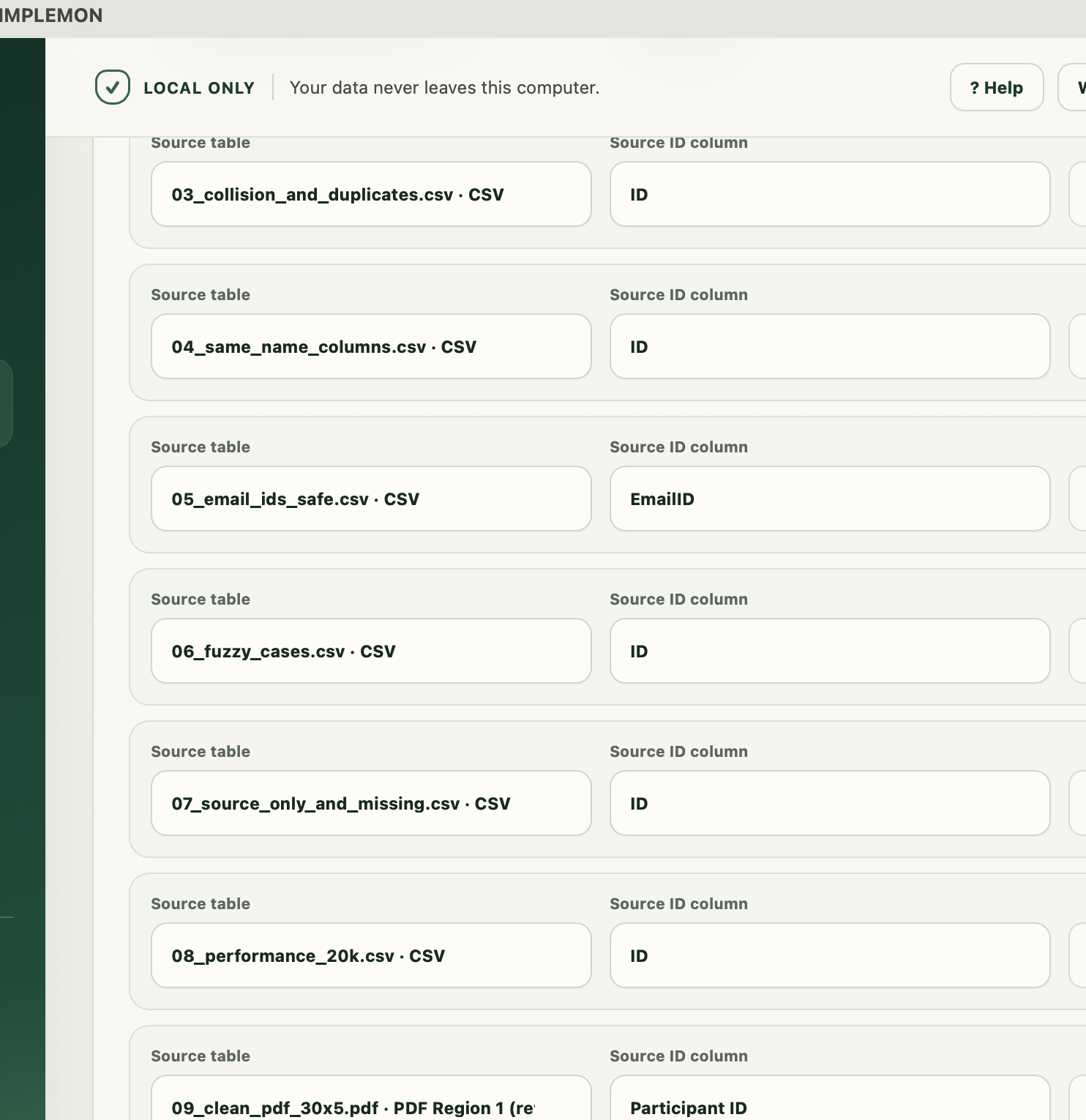
Pick the base table and ID column for each source.
See duplicates, formatting issues, near matches, and conflicts.
You decide which suggested changes are correct.
Save merged data with audit and provenance records.
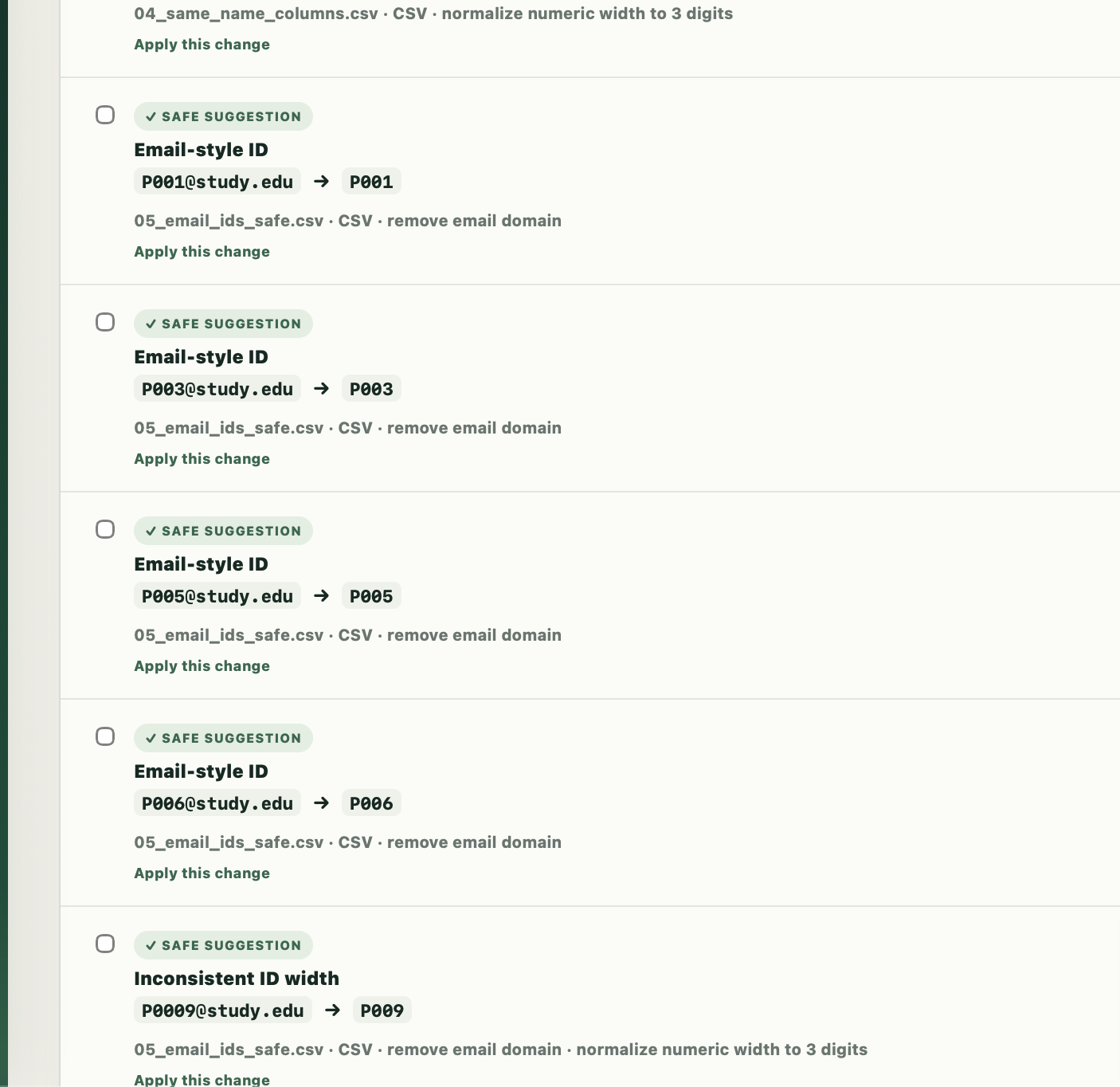
Formatting cleanup and possible near-ID matches stay visible until you approve them. If a cleanup would create a duplicate ID, the app blocks it instead of guessing.
Your base table defines who belongs in the final dataset. IDs found only in source files are reported, not silently added as new participants.

Catch spacing, padding, case, email-style IDs, conservative symbol prefixes, and typo-like near matches.
See duplicate and missing IDs before the merge, with collision-causing cleanups blocked.
When same-name columns disagree, choose what should happen instead of losing the difference.
Keep a readable record of ID cleanups, reviewed matches, source-only IDs, and column decisions.
Create a de-identified copy after merging when you need a cleaner dataset for downstream work.
Optional wide/long reshaping is available after the merge without turning the app into a statistics package.

Select the base table and the ID column for each source before anything is merged.

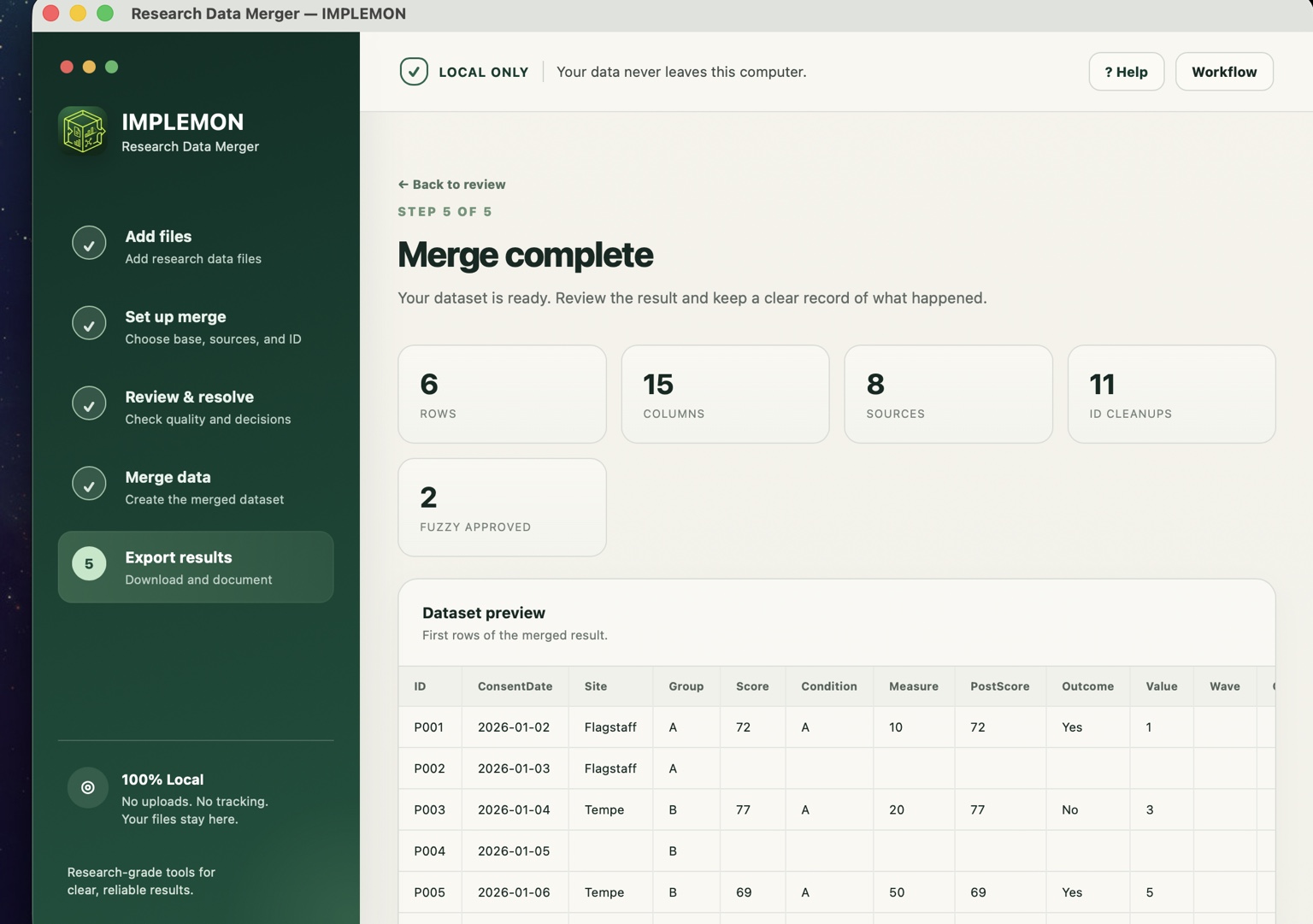
Check row, column, source, cleanup, and reviewed-match counts before exporting the result.
Your files are processed locally on your Mac. Your research data is not sent to IMPLEMON or a third-party server.
Open your files, review the merge, and export the result without uploading your study data. Text-based PDFs are supported; scanned/image-only PDFs are not automatically OCR’d.
Useful for behavioral and social science workflows, survey studies, participant panels, lab rosters, longitudinal files, and other projects where several datasets need to line up by ID.
It can also work with other ID-based datasets, but the product is intentionally designed around research data preparation first.
Mac · local processing · one-time purchase planned. Preparing for launch.